Prompt Engineering for Enterprise AI: From Vague Inputs to High-Impact Outputs
In agentic AI systems, the quality of the prompt is the quality of the outcome. This article breaks down the discipline of prompt engineering — its types, patterns, and a repeatable formula — with real industry examples you can apply today.
Why Prompt Engineering Is a Core Skill for AI Practitioners
When organisations deploy AI systems — from simple chatbots to complex multi-agent workflows — one variable determines reliability more than model selection, infrastructure, or fine-tuning: how well the prompt is written.
In agentic AI architectures, a single poorly scoped instruction can cascade into downstream errors across multiple AI agents. In GenAI deployments in financial services, healthcare, or operations, a vague prompt is not just inefficient — it can be non-compliant, misleading, or costly.
Prompt engineering is not just a developer skill. It is a strategic capability for any professional building, deploying, or governing AI systems.
What Is Prompt Engineering?
Prompt engineering is the art and science of crafting inputs (prompts) that guide AI models to generate accurate, relevant, and high-quality responses. It sits at the intersection of linguistics, domain expertise, and systems thinking.
The core principle is simple: Better Prompt → Better Output.
A well-engineered prompt:
- Improves accuracy and reduces hallucination
- Controls tone and output format
- Reduces ambiguity and back-and-forth
- Saves time and scales with automation
The 5 Types of Prompting — And When to Use Each
1. Zero-Shot Prompting
No examples provided. The model performs the task based solely on the instruction.
Enterprise Example — Compliance
Summarise this regulatory notice in three bullet points, focusing on obligations, timelines, and penalties.
Best for: straightforward tasks where the model has strong prior knowledge and the output format is clear.
2. Few-Shot Prompting
You provide examples so the model learns the expected pattern before completing the actual task.
Enterprise Example — AML Transaction Screening
Below are examples of how to classify transaction alerts:
Alert: "£45,000 transferred to offshore account with no prior history." → Classification: High Risk | Reason: Unusual destination, large amount, no transaction history.
Alert: "Regular monthly salary credit of £3,200." → Classification: Low Risk | Reason: Consistent pattern, known source.
Now classify this alert: "£12,000 cash deposit split across 3 branches in 2 hours."
Best for: classification, data extraction, formatting tasks where consistency matters.
3. Instruction-Based Prompting
Give the model clear, explicit instructions about what to do, how to do it, and in what format to respond.
Enterprise Example — Risk Report Generation
You are analysing a model risk report. Do the following:
1. Identify the top 3 model risk concerns
2. Assess severity (High / Medium / Low) for each
3. Suggest one remediation action per concern
4. Output as a structured table with columns: Risk, Severity, Action
Best for: structured outputs, reports, step-by-step processing tasks.
4. Role-Based Prompting
Assign a persona or role to the model. This primes it with the right context, vocabulary, and reasoning style for your use case — and is one of the most powerful techniques in enterprise settings.
Without Role vs With Role
Without Role
Explain machine learning.
Output: General, broad, may lack structure.
With Role
Act as a senior data science consultant briefing a Chief Risk Officer. Explain machine learning with financial services examples, avoiding technical jargon.
Output: Structured, relevant, business-oriented.
5. Chain-of-Thought (CoT) Prompting
Ask the model to think step-by-step before giving a final answer. This dramatically improves accuracy on reasoning-heavy tasks.
Enterprise Example — Fraud Investigation
A customer disputes a £2,400 transaction they don't recognise. The transaction occurred at 2:47 AM from a device registered 6 hours earlier from a different country. Think step by step: assess the risk indicators, determine whether this is likely fraud or a legitimate transaction, and recommend an investigation action. Let's think step by step.
Best for: complex reasoning, root cause analysis, risk assessment, multi-factor decisions.
Bad vs Good vs Best: Enterprise Prompt Examples
The difference between a bad and a best prompt is not just quality — it is the difference between a usable AI tool and a liability.
Analyse this customer complaint.
Why it fails: Too vague. No audience, no format, no constraints. The model has no idea what analysis means in your context.
Analyse this customer complaint and identify the main issue, urgency level, and recommended response action.
Why it's better: Clear task, defined output structure. Still lacks role, tone, and format precision.
Act as a senior customer experience analyst at a UK retail bank. Review the following customer complaint and provide: (1) Root cause classification from this list: [Product Issue / Process Failure / Staff Conduct / System Error / Other], (2) Urgency level: High / Medium / Low with justification, (3) Recommended response action in one sentence. Format your response as a structured JSON object. Avoid speculation — base your analysis only on the text provided.
Why it's best: Role defined, task precise, output format specified, constraints set, hallucination risk reduced.
The Prompt Engineering Formula
The most reliable structure for enterprise prompt engineering is:
Role + Task + Context + Format + Constraints
Role
Who the model is
Task
What you want done
Context
Background & data
Format
How you want it
Constraints
Limits & guardrails
Formula in Action — Agentic AI Use Case
Scenario: Agentic AI agent for HR policy Q&A
Role: Act as a knowledgeable and empathetic HR business partner for a mid-sized UK financial services firm.
Task: Answer the employee's question about their parental leave entitlement.
Context: The relevant policy section is attached. The employee is a full-time permanent staff member who joined 14 months ago.
Format: Respond in plain English in 3–4 sentences. End with a suggestion to contact HR directly for personal circumstances.
Constraints: Do not make promises not stated in the policy. If uncertain, say so clearly and direct to HR.
Why This Matters Even More in Agentic Systems
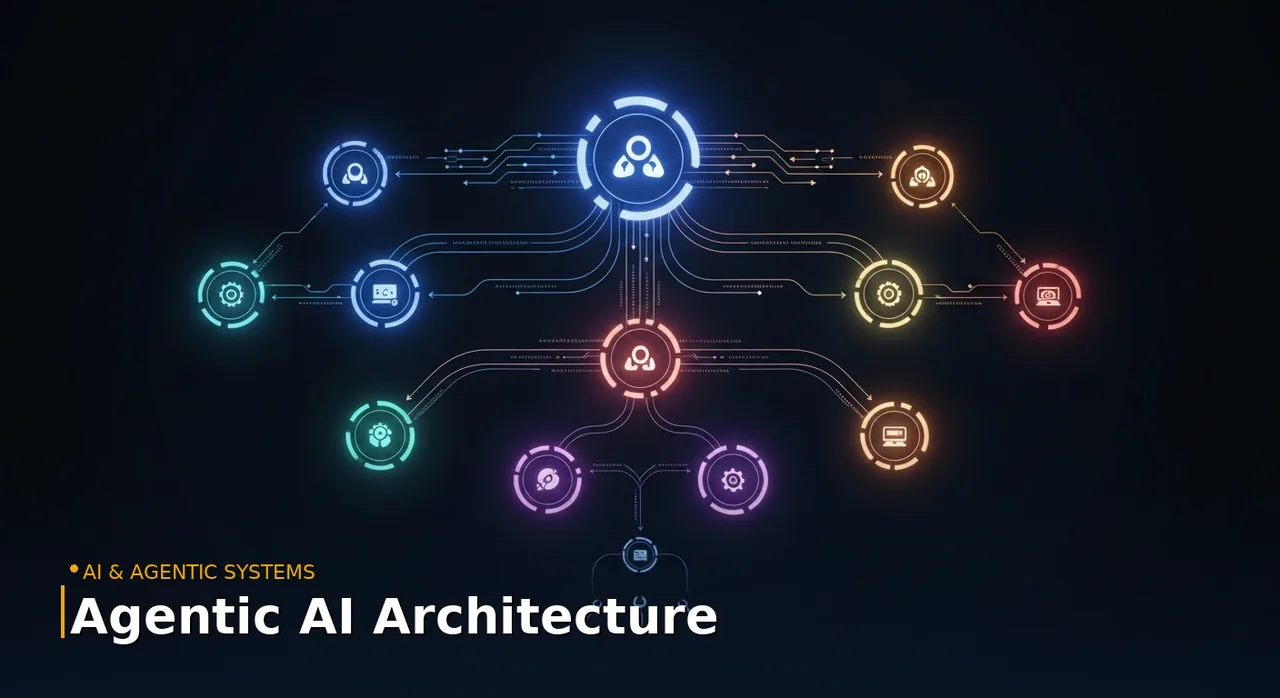
In a standalone chatbot, a bad prompt gives you a bad answer. In an agentic AI system — where multiple AI agents collaborate, pass outputs to each other, and take real-world actions — a bad prompt at step one can produce compounding errors downstream.
Consider a multi-agent AML workflow:
- Agent 1 extracts transaction risk signals from raw data
- Agent 2 classifies the alert severity
- Agent 3 drafts the investigator narrative
- Agent 4 routes to the appropriate compliance team
If Agent 1's prompt is vague — "summarise this transaction" — every downstream agent operates on incomplete signal. By Agent 4, you may have a misrouted, poorly documented investigation. Prompt engineering at each agent boundary is not optional; it is governance infrastructure.
Best Practices for Enterprise Prompt Engineering
- Be specific about the audience. "Explain for a non-technical executive" produces a completely different output than "Explain for a data scientist."
- Define the output format explicitly. JSON, table, bullet points, paragraph — specify it every time in production prompts.
- Add constraints to reduce hallucination. "Only use information provided. If uncertain, state so clearly." is a guardrail, not a nicety.
- Use role-based framing for domain tasks. The role primes the model's vocabulary, reasoning depth, and tone simultaneously.
- Iterate and version your prompts. Treat production prompts like code — version-controlled, tested, and reviewed before deployment.
- Test with adversarial inputs. If a prompt can be misunderstood, a user or downstream agent will misunderstand it. Test edge cases early.
Key Takeaways
The quality of AI output depends directly on the quality of your prompt — not just the model.
Use the five prompting types strategically: zero-shot for simple tasks, CoT for reasoning, role-based for domain expertise.
Apply the formula: Role + Task + Context + Format + Constraints for any production-grade prompt.
In agentic systems, prompt quality is governance. Poor prompts at agent boundaries compound into unreliable workflows.
Good prompting is a skill. It requires deliberate practice, iteration, and continuous refinement.
Good Prompting is a Skill → Practice, Iterate, Improve. The professionals who master this will have a decisive edge in every AI-powered organisation.