Enterprise AI:
Strategy & Execution
Building AI systems that work in regulated, high-stakes environments requires more than technical skill. These articles draw from over a decade of consulting across financial services, global enterprises, and technology firms — covering governance, multi-agent architectures, evaluation frameworks, and trusted AI.

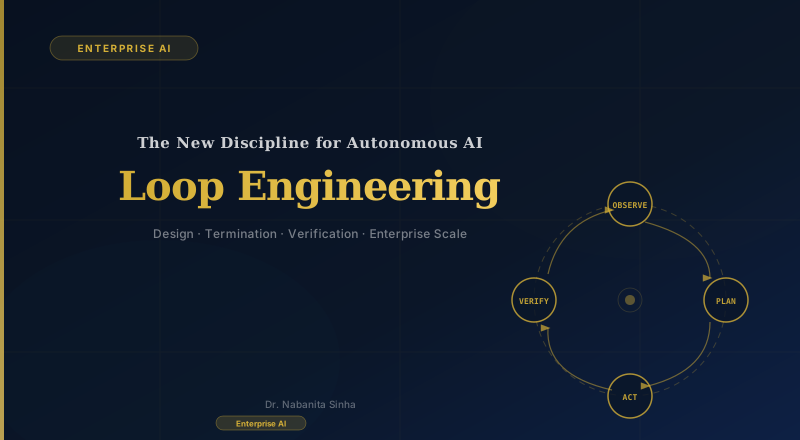
Loop Engineering: The New Discipline for Autonomous Enterprise AI
Loop engineering is the practice of designing the system that runs, checks, and re-runs your AI agent — covering the four loop types, the four-level stack, and the three hardest problems every enterprise team must solve.
Read Article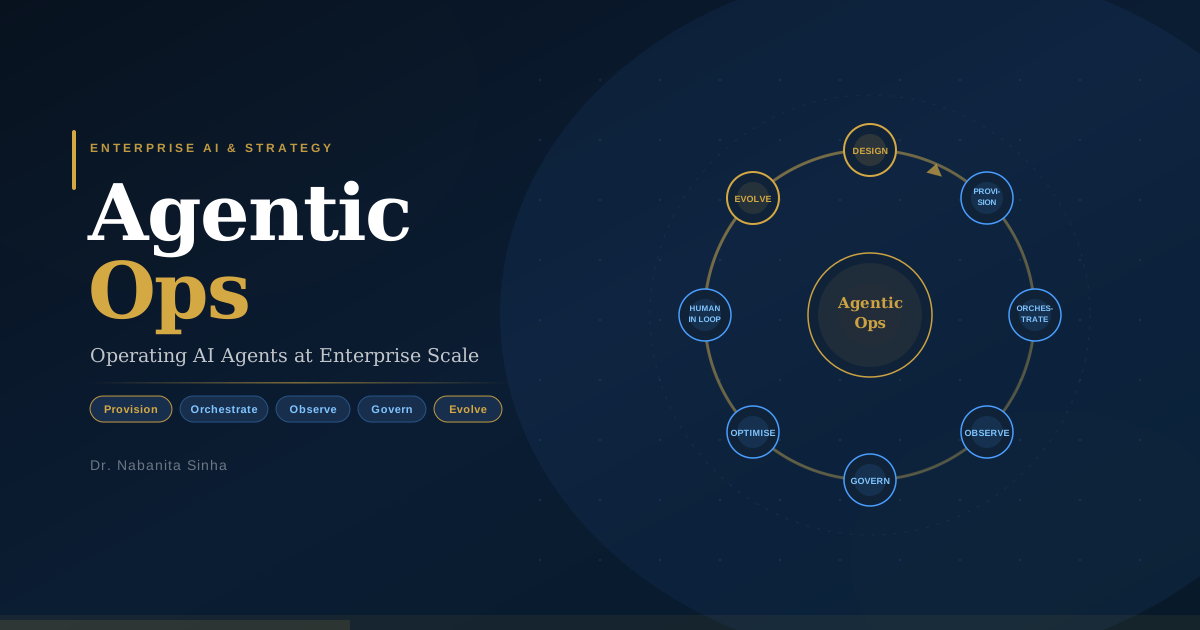
AgenticOps: Operating AI Agents at Enterprise Scale
The operational discipline for managing autonomous AI agents across their full lifecycle — provisioning, orchestration, observability, governance, drift control, and safe decommissioning.
Read Article
Enterprise AI Risk Management: The GEN-5 Validation Framework
A five-pillar validation and assurance framework that extends established Model Risk Management principles — SR 11-7, SS1/23, MAS AIRG — across GenAI, RAG, PMAS, and fully Agentic AI systems.
Read Article
The Architecture of Controlled Autonomy: Governing Enterprise AI Agents
How to govern autonomous AI agents at enterprise scale — covering agent gateways, identity, behavioral drift detection, least-privilege scoping, and emergency kill switches.
Read Article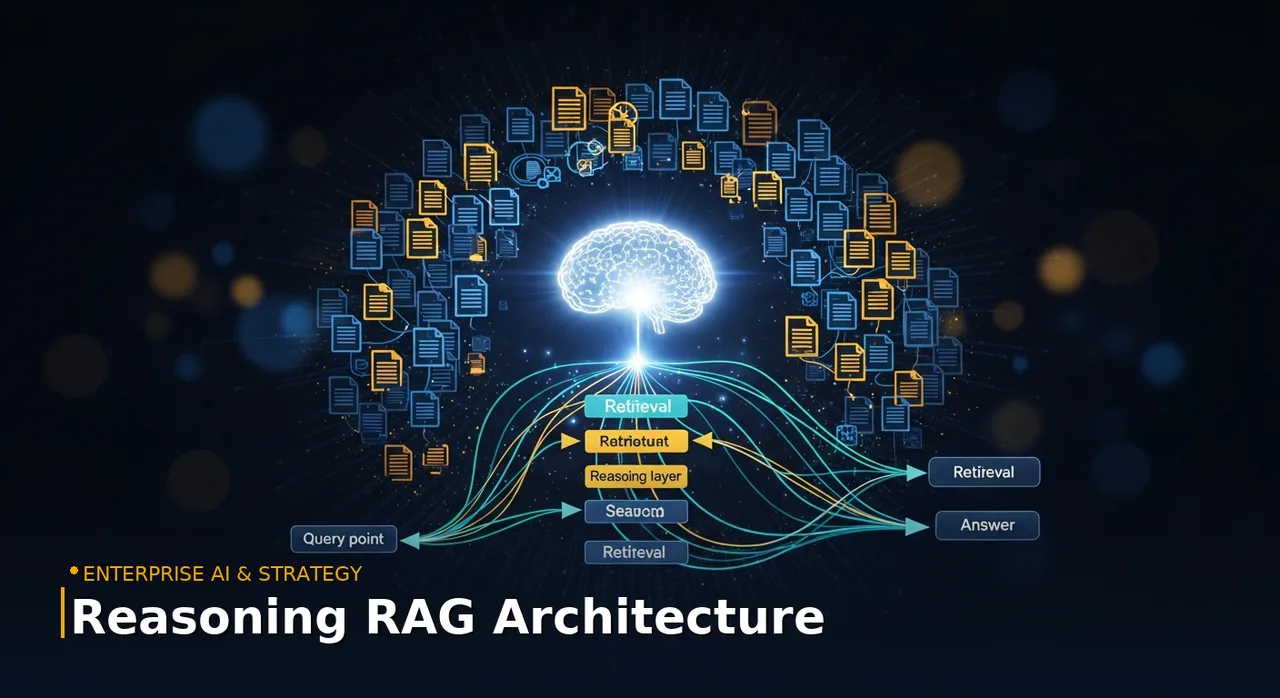
Reasoning RAG Architecture for Enterprise AI
How Reasoning RAG replaces the linear retrieve-then-generate pipeline with iterative multi-hop retrieval, a structured reasoning engine, trust validation, and fully explainable responses — built for regulated enterprise environments.
Read ArticleReal Strategy. Easy Explanations.
Enterprise AI concepts, stripped of jargon. Watch to grasp the idea, then dive into the articles for technical depth.
RAG & Retrieval · now playing
Reasoning RAG for Enterprise AI
On LinkedIn
External Reading
Additional articles published on LinkedIn covering related enterprise AI topics.
Enterprise AI Performance Optimisation: Framework & Systems
A practical framework for engineering performance in enterprise AI systems — covering latency, throughput, inference efficiency, RAG optimisation, and cost-quality tradeoffs at production scale.
Read on LinkedIn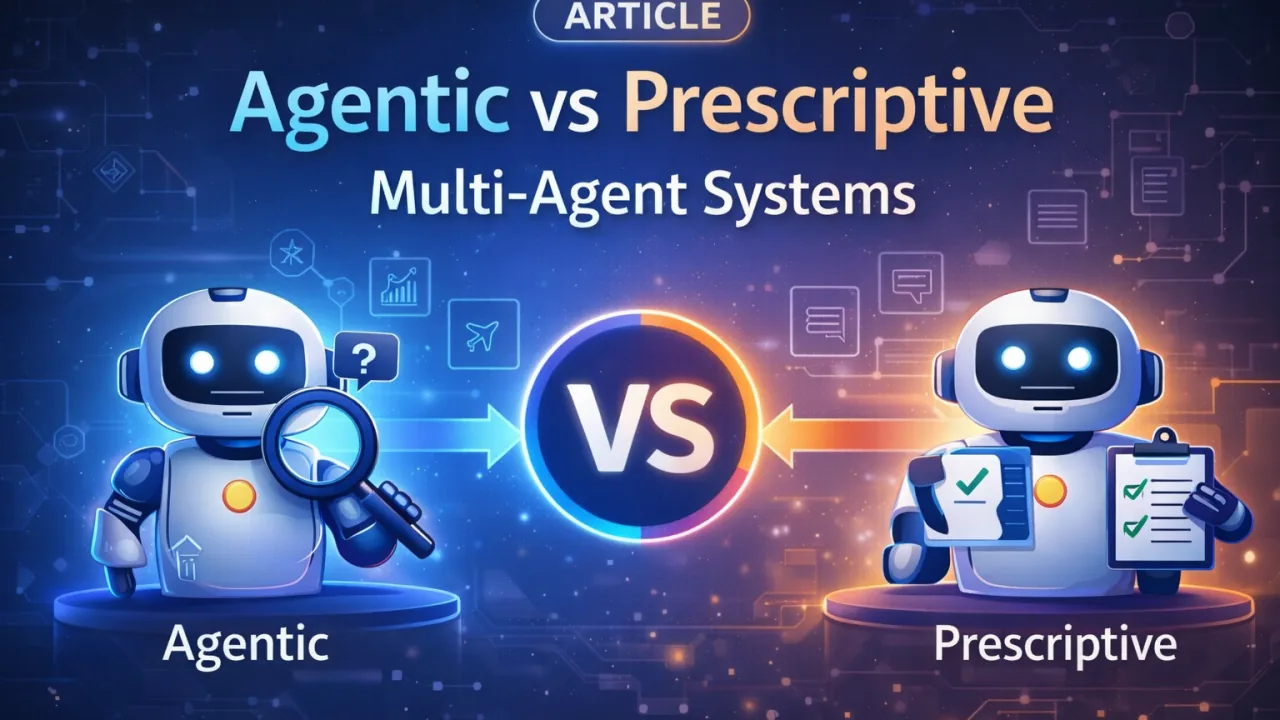
Agentic vs Prescriptive Multi-Agent Systems: Which One Should You Choose?
A deep dive into when to use autonomous agentic frameworks versus structured prescriptive workflows in enterprise AI deployments.
Read on LinkedIn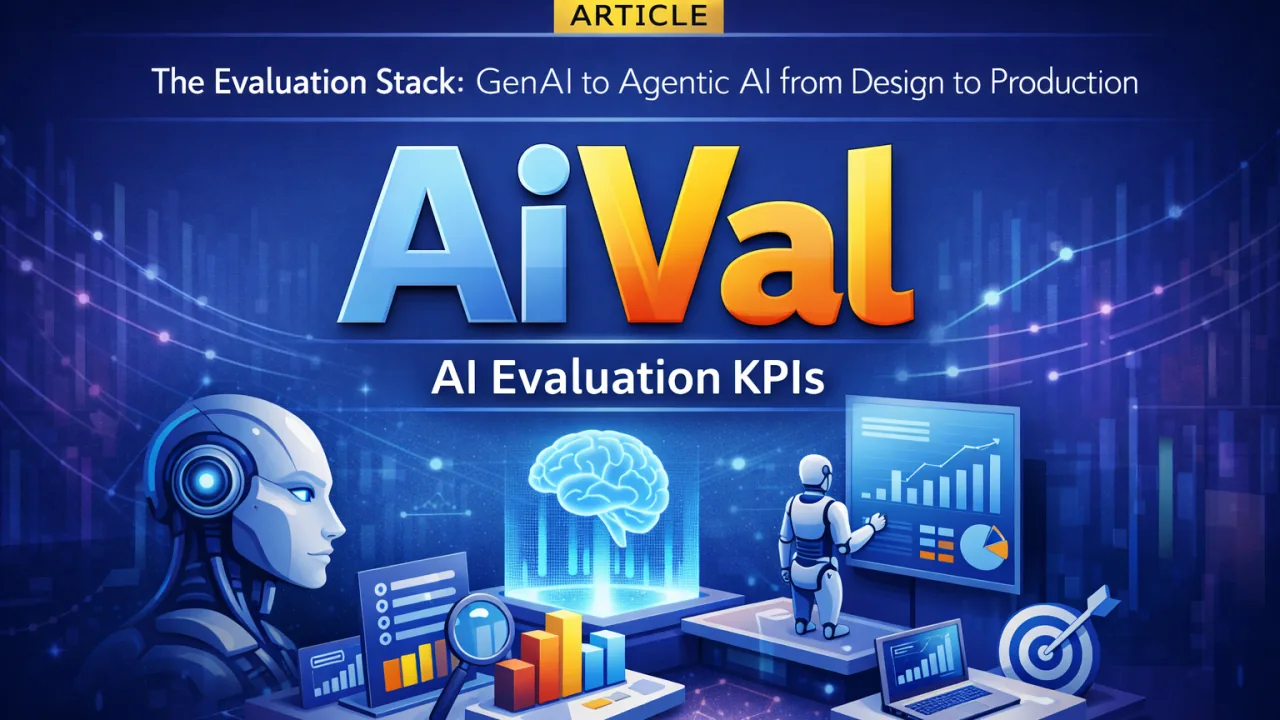
The GenAI & Agentic AI Evaluation Stack: From Design to Deployment
How to build a rigorous evaluation stack that covers the full lifecycle of generative and agentic AI systems.
Read on LinkedIn
From Autonomy to Accountability: The TRACE Framework for Governing AI
Introducing TRACE — a practical framework for implementing compliance-ready AI governance in regulated industries.
Read on LinkedIn
How to Actually Quantify Trust in GenAI Systems
Moving beyond intuition: concrete metrics and methods to measure and validate trust in generative AI outputs.
Read on LinkedIn
How to Build Compliance-Ready Multi-Agent AI Automation for AML Alert Investigation
A practical blueprint for designing audit-ready, compliance-first multi-agent AI systems that accelerate AML alert investigation in financial services.
Read on LinkedIn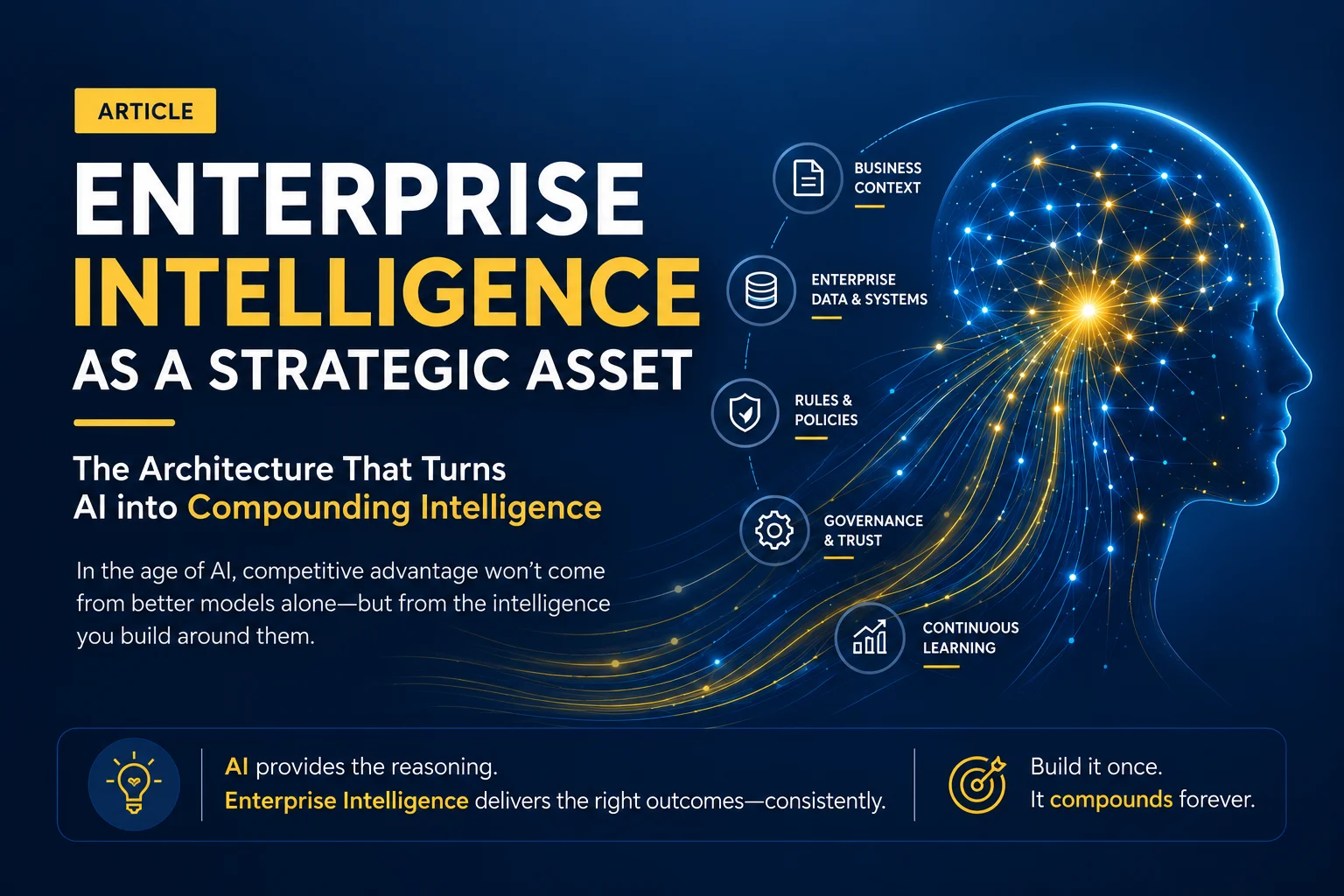
How to Build Enterprise Intelligence as a Strategic Asset
A strategic framework for transforming enterprise AI from a cost centre into a compounding intelligence asset — covering data foundations, capability layering, and boardroom alignment.
Read on LinkedIn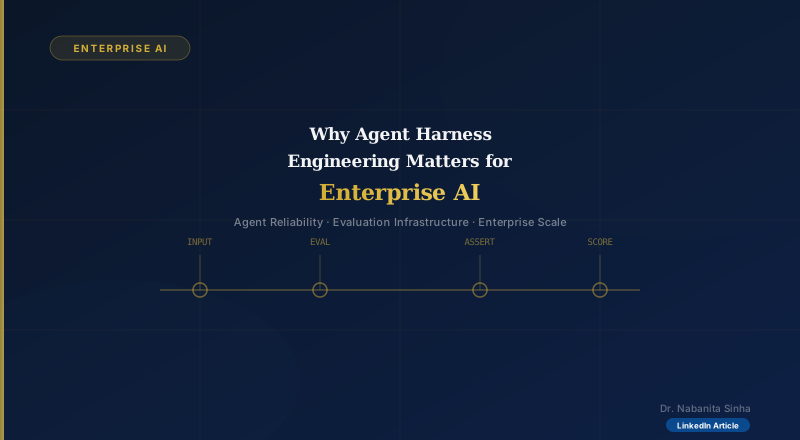
Why Agent Harness Engineering Matters for Enterprise AI
Why harness engineering — the practice of building structured, repeatable test infrastructure for AI agents — is the missing discipline separating reliable enterprise deployments from brittle, unpredictable ones.
Read on LinkedIn
Context Engineering for Enterprise AI Agents
Why context is the new prompt — a deep dive into how enterprise AI agents reason, retrieve, and act based on the context they are given, and how to engineer that context for reliability and scale.
Read on LinkedIn