Memory Is What Turns a Model into a Stateful Agent
A large language model is not, by itself, a durable memory system. Its learned parameters contain broad statistical knowledge, but the model does not automatically remember a customer conversation, a tool result or a decision from yesterday. An agent becomes stateful only when an application deliberately captures information, stores it, retrieves it and places selected items back into the model's context.
That distinction matters. The context window is the model's current input space; a memory store persists information outside the model; and a retrieval policy decides what returns to context. Treating all three as “memory” hides the engineering decisions that determine quality, cost and risk.
A useful mental model
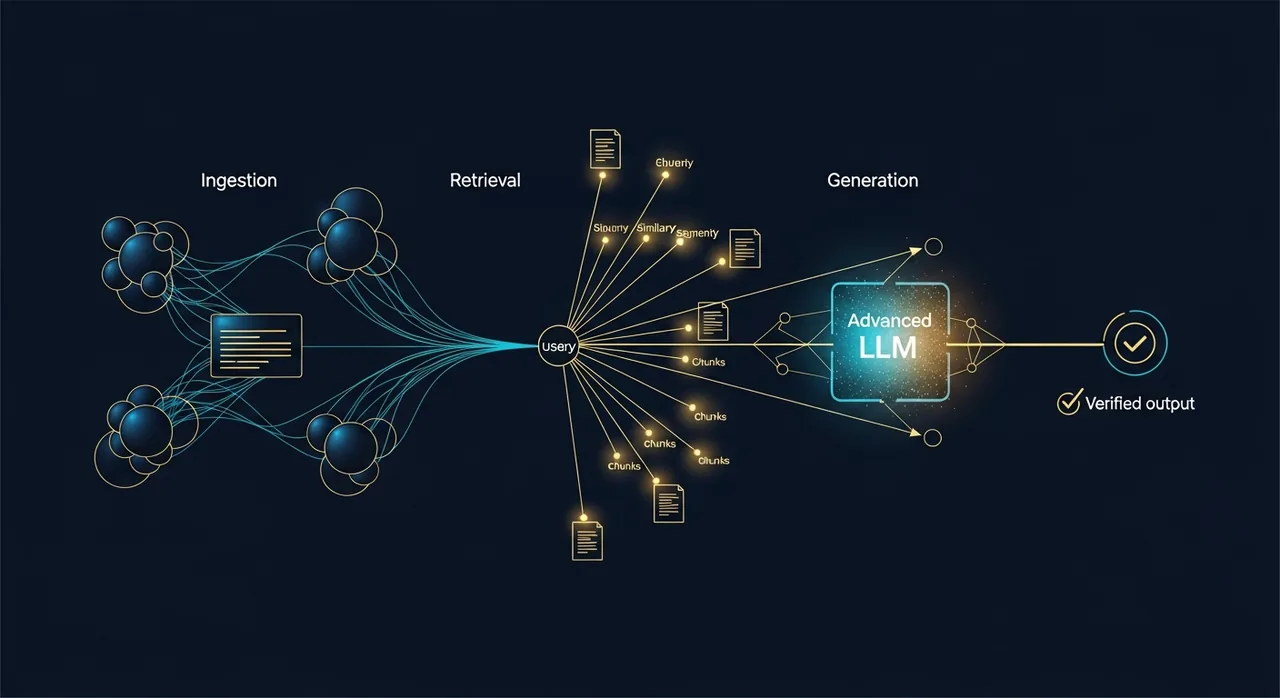
Agent memory is a controlled pipeline: observe → classify → validate → store → retrieve → use → update or forget. A vector database may support this pipeline, but it is not the pipeline itself.
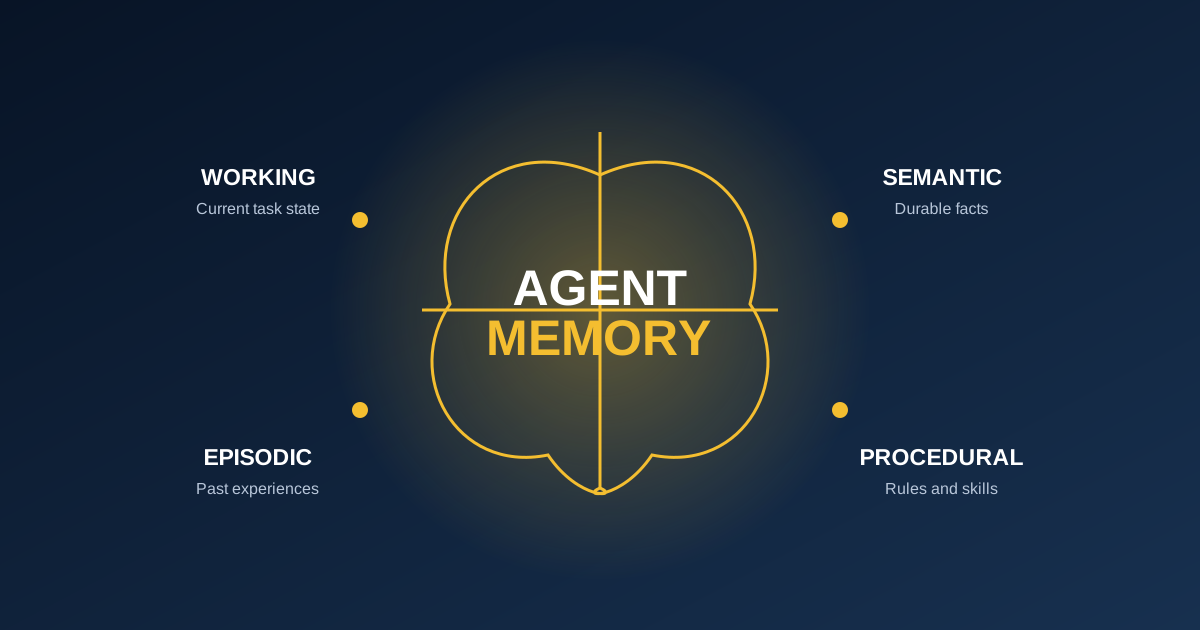
The Four Useful Types of Agent Memory
The categories below borrow from cognitive science and are useful design abstractions—not a universal industry standard. A production record can belong to more than one category, and implementations may use different names.
Working memory
One active task or threadPurpose: Current messages, intermediate results, plans, tool outputs and unresolved decisions.
Primary risk: Context overflow, distraction and prompt injection carried forward.
Semantic memory
Across sessionsPurpose: Stable facts about users, products, policies, entities and the organization.
Primary risk: Stale facts, missing provenance and confident retrieval of incorrect data.
Episodic memory
Across runsPurpose: What happened in prior interactions: actions, outcomes, feedback and successful or failed trajectories.
Primary risk: Copying a past solution into the wrong context or preserving sensitive history.
Procedural memory
Across agents and versionsPurpose: How work should be done: instructions, policies, workflows, tool-use patterns and learned strategies.
Primary risk: Behavioral drift, unauthorized policy changes and unreviewed self-modification.
A second, complementary classification is operational: short-term or thread memory persists state within a conversation, while long-term memory survives across threads or sessions. Working memory is normally short-term. Semantic, episodic and procedural memory are commonly long-term.
Why Enterprises Need Memory—and Why They Must Control It
- Continuity: the agent can resume a case, remember verified preferences and avoid asking for the same information repeatedly.
- Personalization: responses and workflows can reflect role, history and permitted preferences without rebuilding context every time.
- Learning from outcomes: episodic records enable evaluation of which plans, tools and interventions worked.
- Coordination: multiple agents can share approved task state and hand-offs rather than relying on fragile prompt chains.
- Efficiency: selective retrieval and summarization reduce repeated computation and unnecessary context tokens.
- Auditability: governed memory can preserve evidence about what the agent knew, retrieved and changed at decision time.
These benefits only appear when retrieval is precise and writes are trustworthy. More memory is not automatically better. Every additional item competes for attention in the context window and increases the surface area for privacy, security and accuracy failures.
A Production Memory Architecture
1. Capture
Collect messages, tool outputs, feedback and state with identity, tenant and source metadata.
2. Write gate
Classify sensitivity, validate the source, detect injection, deduplicate and decide whether the item deserves persistence.
3. Purpose-built storage
Use a checkpointer for thread state, structured stores for canonical facts, search indexes for unstructured recall and immutable logs for audit.
4. Retrieval
Filter first by tenant, user, permissions, purpose and freshness; then rank by relevance, recency, confidence and utility.
5. Context assembly
Provide the smallest sufficient set, clearly labeled as data rather than instructions, with provenance and timestamps.
6. Maintenance
Consolidate, correct, expire, archive and delete memory according to policy and user rights.
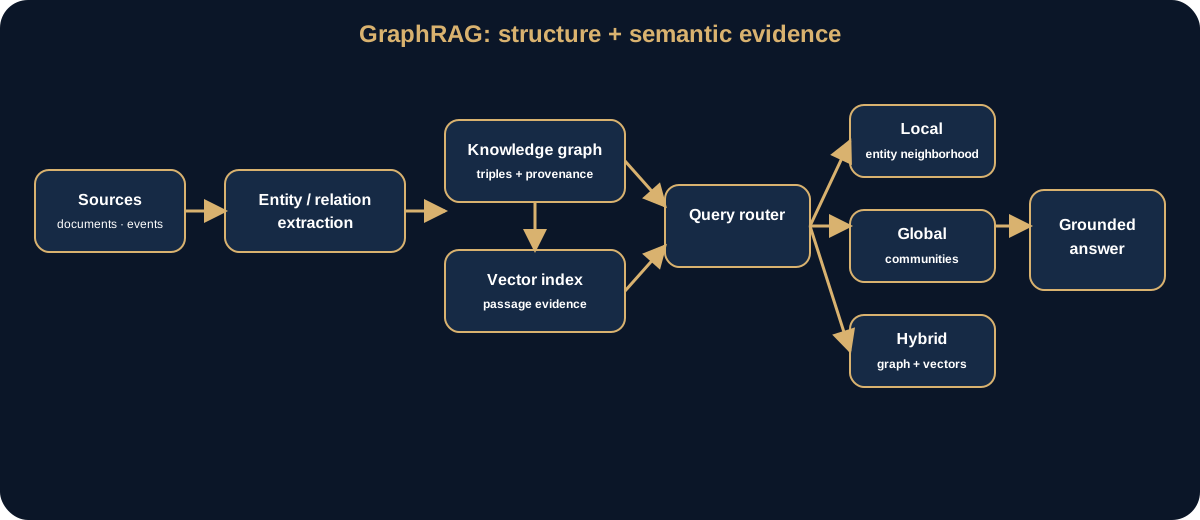
Embeddings are useful for fuzzy recall, but enterprise memory should not be “vector-only.” Exact identifiers, permissions, validity dates, confidence, provenance and deletion status belong in structured metadata. Hybrid retrieval—metadata filters plus lexical and semantic ranking—is usually safer than unconstrained similarity search.
What Goes Wrong When Memory Is Poorly Handled
1. Memory poisoning and persistent prompt injection
An attacker can place malicious instructions in a document, webpage or message that the agent later stores and repeatedly retrieves. The attack becomes durable. Memory content must be treated as untrusted data, not privileged instructions.
2. Cross-user or cross-tenant leakage
Weak namespace filters can retrieve one customer's history for another. Tenant and authorization filters must be enforced before similarity ranking—not requested from the model in natural language.
3. Stale, contradictory and low-confidence facts
A user changes role, a policy expires, or a tool returns a temporary value. Without timestamps, source priority and conflict resolution, the agent may retrieve an obsolete fact and present it confidently.
4. Context pollution and degraded reasoning
Dumping full conversation histories into every call increases latency and cost while burying relevant evidence. Long contexts can still suffer from recency bias, distraction and “lost in the middle” effects.
5. Privacy and regulatory over-retention
Agents can inadvertently preserve personal, confidential or regulated data. A memory system needs purpose limitation, consent where required, retention schedules, encryption, access controls, deletion workflows and auditable use.
6. Feedback loops and behavioral drift
If an agent writes its own generated claims back as facts, errors can become self-reinforcing. Procedural self-modification is especially risky: changes to instructions or learned strategies should be versioned, evaluated and approved.
How to Manage Agent Memory Effectively
- Define memory contracts. For every memory type specify owner, schema, allowed sources, write authority, readers, retention, confidence and deletion rules.
- Separate facts from instructions. Retrieved facts should never silently override system policy. Keep procedural memory in a controlled, versioned policy layer.
- Make writes selective. Store durable value, not every token. Use deterministic rules for sensitive data and model-assisted extraction only behind validation.
- Attach provenance. Preserve source, timestamp, subject, tenant, confidence and validity period. Make corrections supersede old records rather than creating silent contradictions.
- Retrieve with hard boundaries. Apply identity, authorization, jurisdiction and purpose filters before relevance scoring. Enforce a context budget.
- Consolidate safely. Summaries should point back to source records. Do not let lossy summaries become unquestioned canonical truth.
- Support forgetting. Apply TTLs, deletion and user correction. Remove derived indexes and caches when the source record is deleted.
- Evaluate the memory system. Test write precision, retrieval precision/recall, stale-memory rate, contradiction rate, privacy leakage, poisoning resistance, latency, token cost and task success.
Enterprise launch checklist
Memory in Multi-Agent Systems
Multi-agent systems add a crucial distinction between private memory, task-scoped shared memory and organizational memory. Sharing everything creates information leakage and coordination noise. Sharing nothing forces agents to duplicate work. The safest pattern is explicit hand-off artifacts: a bounded task state with owner, provenance, permissions and expiry.
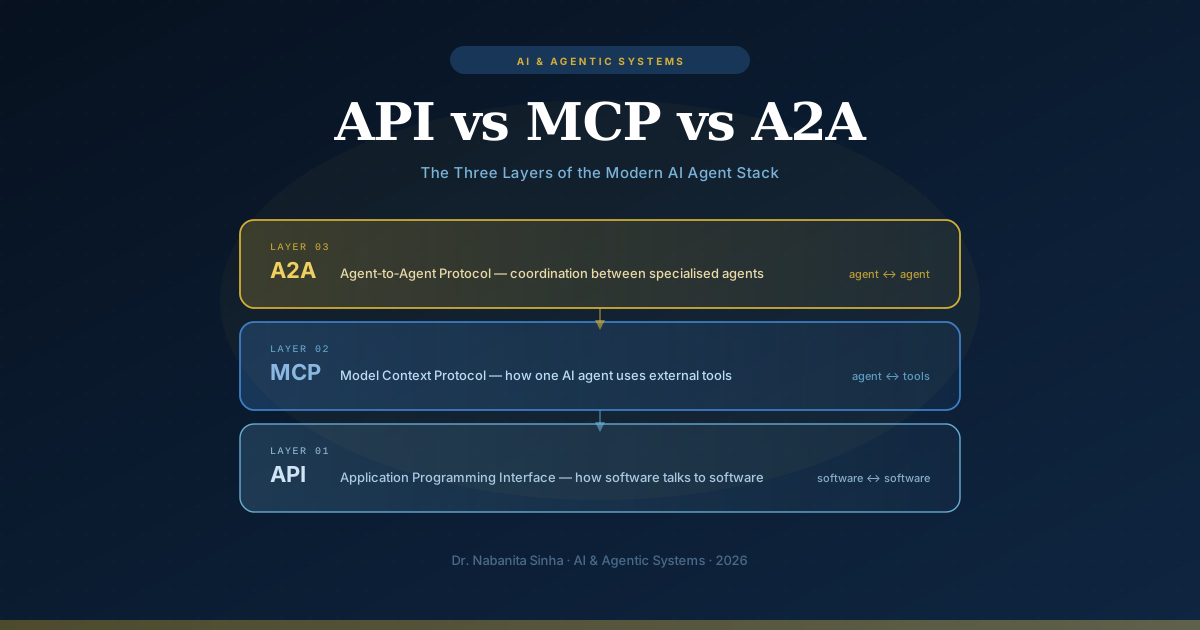
Agents should not use a shared memory store as an unrestricted message bus. Each writer needs an identity and scoped capability; each record needs a schema; and high-impact updates—especially policy, customer facts or financial decisions—need deterministic validation or human approval.
The Strategic Takeaway
Agent memory is not a feature to bolt on after orchestration. It is a state-management subsystem that shapes reliability, security, personalization, cost and accountability. The right goal is not maximum recall. It is the right memory, for the right agent, at the right time, for an authorized purpose—with evidence and a way to forget.